How Strategic Financing Helped NHSA Deliver Critical Sewer Improvements While Saving Millions
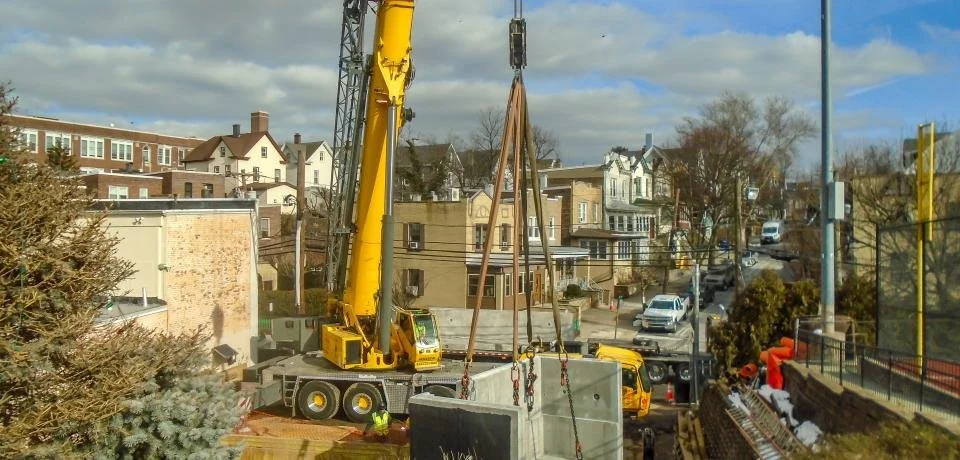
Construction on the Boulevard East Sewer Improvements Project | Photo Courtesy of Jacobs Engineering
WEEHAWKEN, NJ – Major infrastructure improvements can come with a major price tag. But thanks to a partnership with the New Jersey Water Bank, the North Hudson Sewerage Authority (NHSA) was able to complete a critical sewer improvement project in Weehawken while significantly reducing the financial impact on the communities it serves.
The Boulevard East Sewer Improvements project demonstrates how innovative financing can help utilities invest in resilient infrastructure, improve environmental outcomes, and protect ratepayers at the same time. Through the NJ Water Bank, NHSA secured approximately $15.9 million in low-interest financing for the project. Because the work directly addressed Combined Sewer Overflow (CSO) challenges, the project qualified for $12.6 million in principal forgiveness, a form of financial assistance that reduces the amount that must be repaid.
Over the 30-year loan term, NHSA is expected to save approximately $18.6 million through principal forgiveness and reduced interest costs compared to traditional financing methods. According to the New Jersey Infrastructure Bank, those savings exceed the total cost of the project itself, dramatically reducing the burden on ratepayers.
Addressing Real-World Challenges
NHSA provides wastewater treatment services to residents and businesses in Hoboken, Weehawken, Union City, and West New York. Much of the region is served by a combined sewer system, where sanitary wastewater and stormwater travel through the same network of pipes. During heavy rain events, these systems can become overwhelmed, increasing the risk of localized flooding and combined sewer overflows.
Prior to the project, portions of Weehawken along Highwood Avenue experienced "surcharging," a condition in which stormwater exceeds the capacity of sewer pipes, causing backups and increasing pressure on the system. To address the issue, NHSA implemented a stormwater diversion project that redirects excess flow to a nearby section of the sewer network along Boulevard East, where additional capacity was available.
This targeted approach allows the Authority to make smarter use of existing infrastructure while reducing localized flooding risks and decreasing the likelihood of untreated discharges reaching nearby waterways, including the Hudson River.
A Smarter Path to Cleaner Water
Across the country, communities with combined sewer systems face difficult choices when it comes to upgrading aging infrastructure. While full sewer separation projects can be effective, they are often prohibitively expensive in densely developed urban areas. The Boulevard East Sewer Improvements project highlights an alternative approach: strategic investments that deliver meaningful environmental benefits while remaining financially sustainable.
By leveraging state and federal funding programs, NHSA is able to advance projects that improve water quality, strengthen community resilience, and support long-term environmental goals without placing unnecessary financial strain on its customers.
Investing in the Future of North Hudson
Infrastructure improvements are about more than pipes and pumps. They are investments in public health, environmental protection, and community resilience. The Boulevard East Sewer Improvements project not only enhanced the performance of the sewer system but also supported local economic activity, creating an estimated 190 direct one-year construction jobs.
As NHSA continues working to reduce CSOs, modernize infrastructure, and protect the waters of the Hudson River, partnerships like the NJ Water Bank help make those investments possible. The result is a stronger sewer system, cleaner waterways, and a more resilient future for the residents of Hoboken, Weehawken, Union City, and West New York.
Source: New Jersey Infrastructure Bank, "NJ I-Bank Water Infrastructure News (WIN): North Hudson Sewer Authority Boulevard East Sewer Improvements," September 16, 2026.