September 2026 Nor’easter Storm Report
Last weekend’s Nor’easter brought wind, storm surge, and heavy rain to Hoboken, Union City, Weehawken, and West New York. Here is how our system responded.
Storm Summary
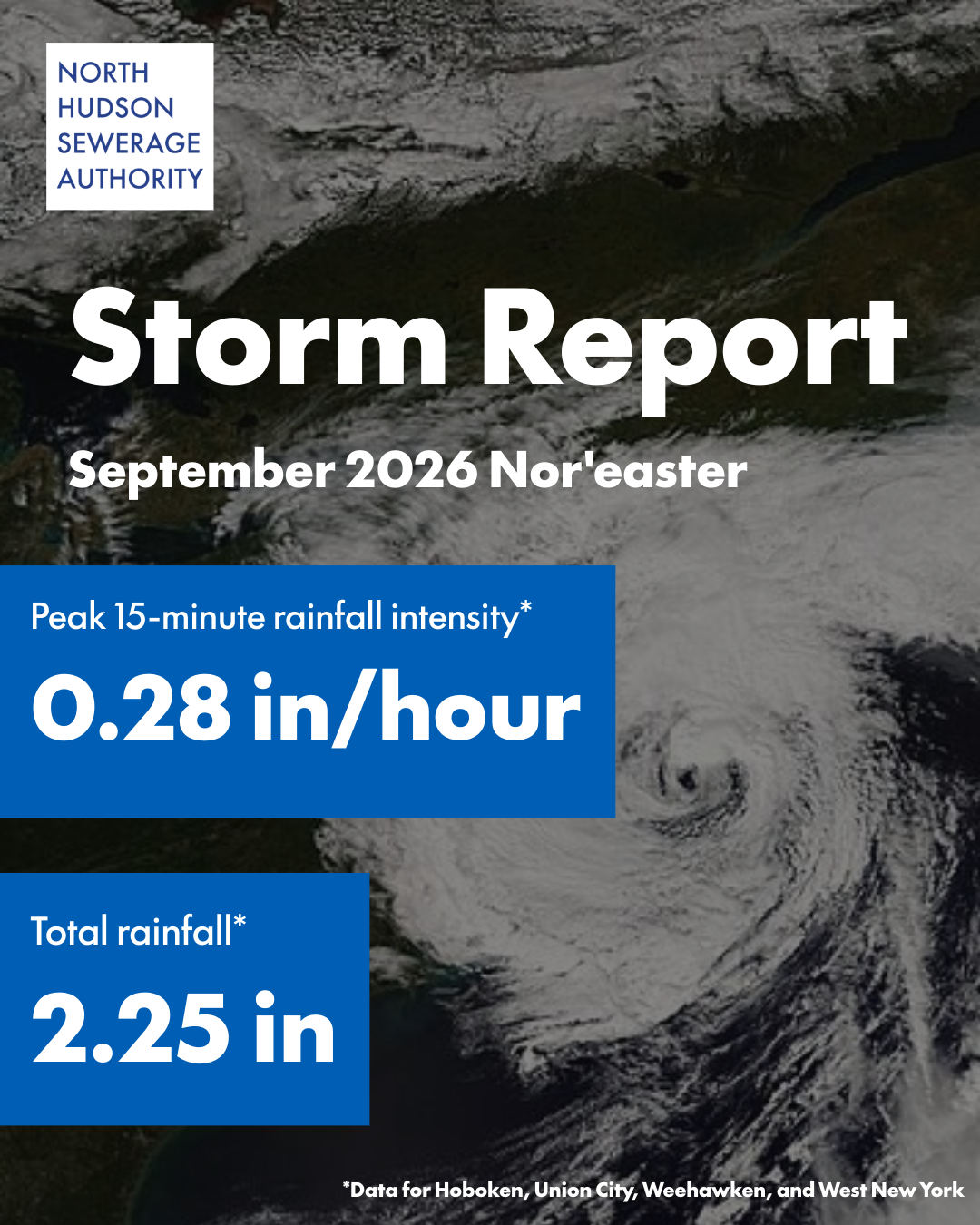
The storm produced a peak 15-minute rainfall intensity of 0.28 inches per hour, with approximately 2.25 inches of total rainfall recorded across the service area.
No flooding related to the rainfall event was observed within the service area. While some areas along the waterfront experienced elevated water levels associated with high tide and tidal surge, these conditions were separate from the performance of NHSA's stormwater pumping infrastructure.
NHSA's pump stations remained fully operational throughout the storm and effectively managed stormwater during the event.
Pumping Station Operations
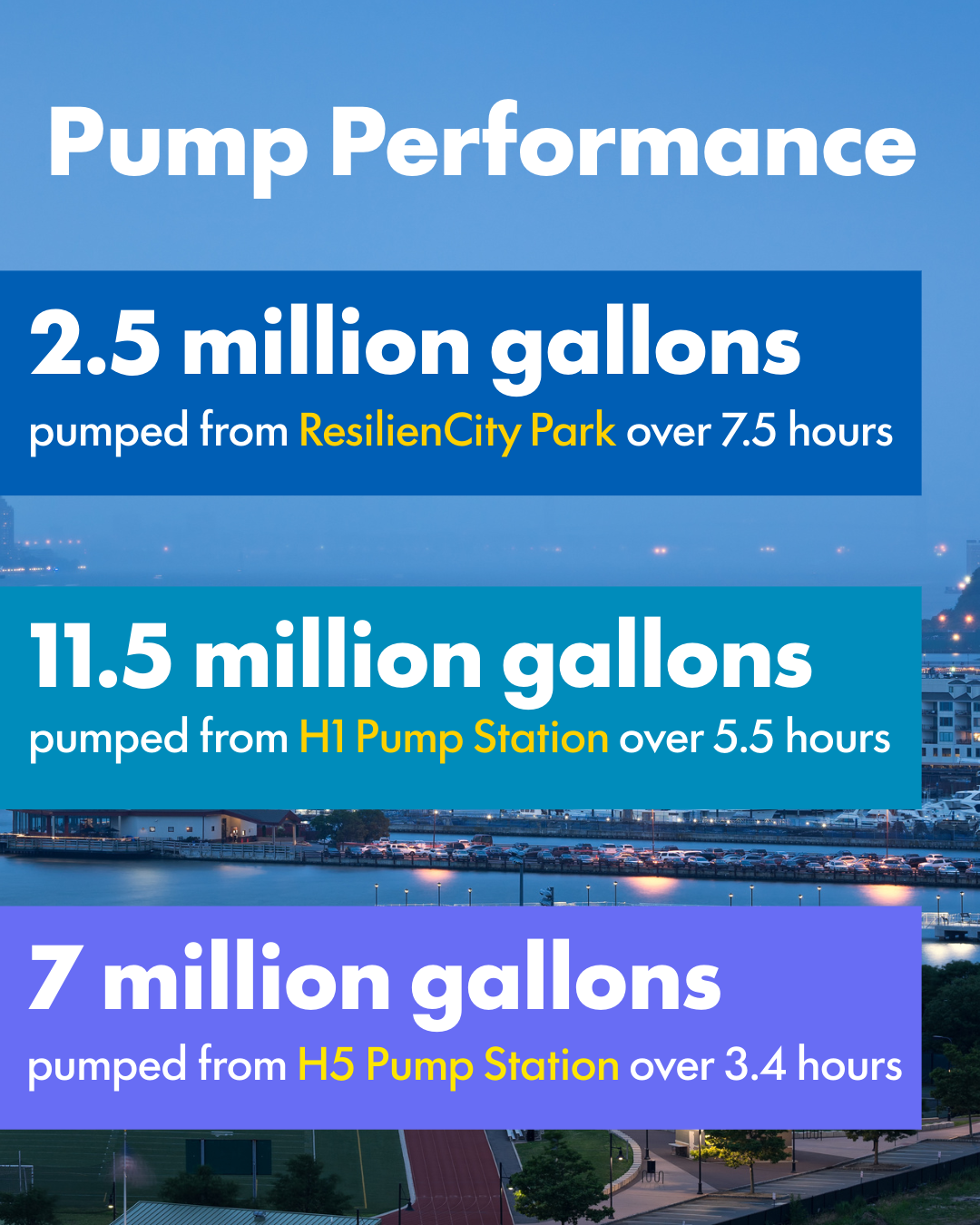
Northwest Resiliency Park pumps were online and fully operational throughout the Nor’easter storm, pumping stormwater out of the H6/H7 area.The pumps operated for approximately 7.5 hours and pumped approximately 2.5 million gallons.
The H1 and H5 pump stations were also online and pumping throughout the event.The H1 Pump Station operated for approximately 5.5 hours and pumped approximately 11.5 million gallons. The H5 Pump Station operated for approximately 3.4 hours and pumped approximately 7 million gallons.
Supporting Community Resilience
Storms that produce heavy rainfall over short periods can place significant demands on drainage systems, particularly when they coincide with elevated tidal conditions. During this Nor'easter, NHSA's pump stations and flood mitigation infrastructure operated as designed, successfully managing stormwater runoff and preventing flooding attributable to the rainfall event.
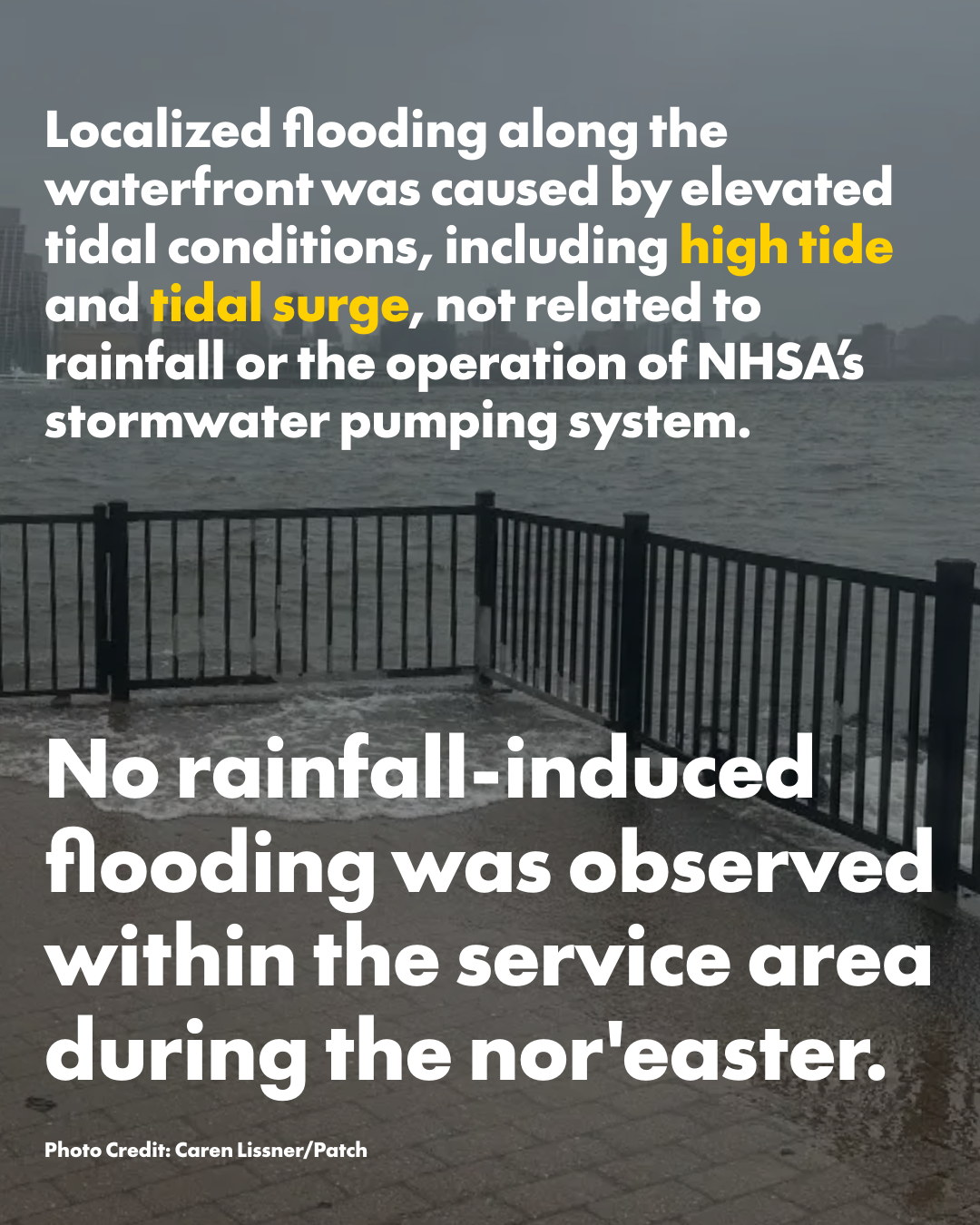
While some waterfront areas experienced elevated water levels associated with high tide and storm surge, NHSA's stormwater pumping system effectively controlled rainfall-driven runoff throughout the service area, helping protect residents, businesses, roadways, and critical infrastructure.
NHSA continues to monitor system performance and invest in resiliency projects that strengthen the region's ability to withstand increasingly intense weather events and changing coastal conditions.
Residents are encouraged to stay informed about local weather forecasts and follow guidance from municipal emergency management officials during severe weather events.
For updates on NHSA operations, infrastructure improvements, and resiliency initiatives, sign up for our mailing list.